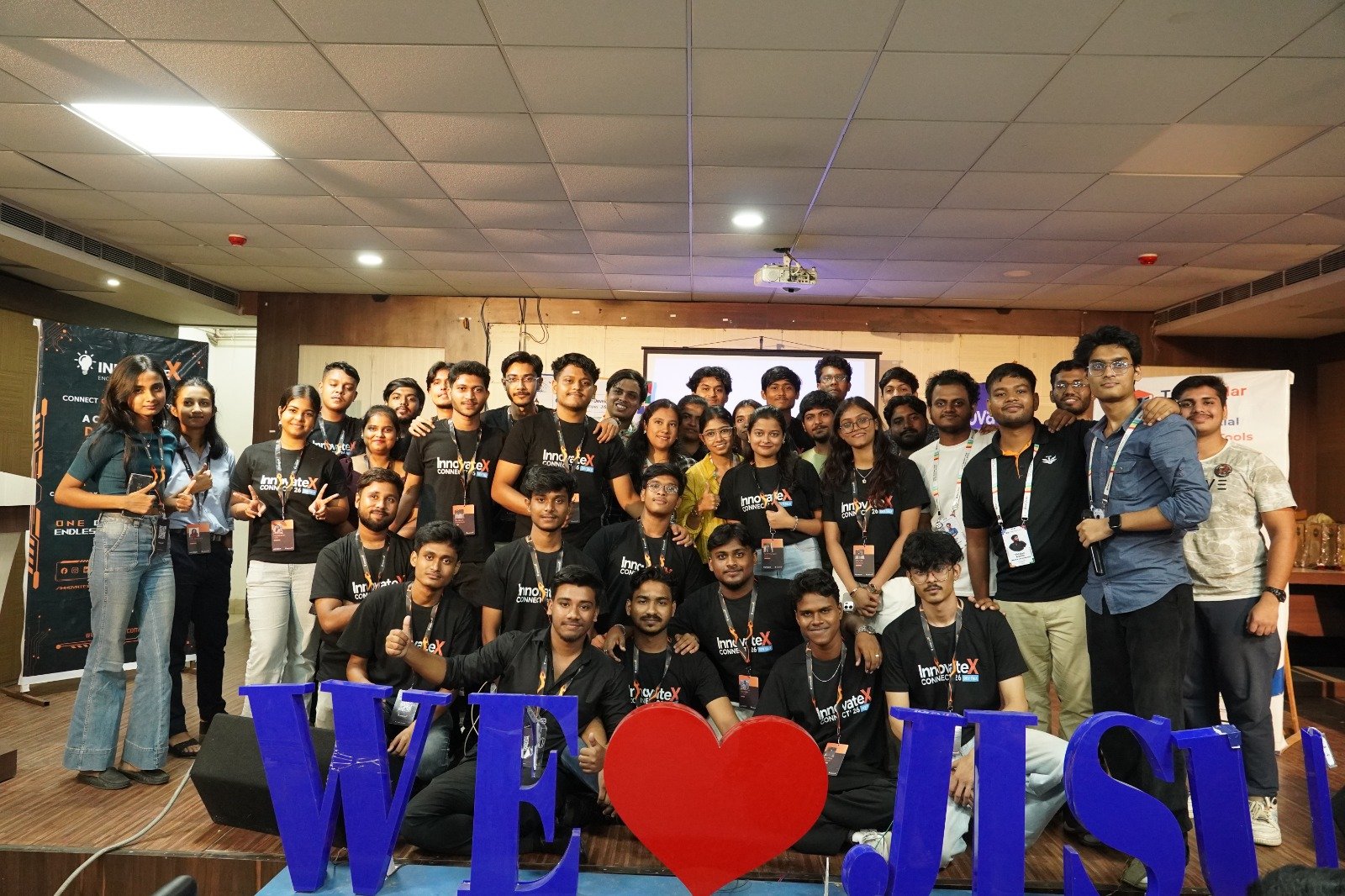

Build with AI Kolkata: Be Future Ready, a hands-on, community-driven initiative organized by GDG Kolkata, was successfully held at Sister Nivedita University. The event brought together developers, AI enthusiasts, and innovators for an engaging experience focused on building real-world AI applications using Google’s latest technologies. The event emphasized practical learning, allowing participants to actively explore tools such as AI Studio, the Gemini and Gemma model family, Antigravity, and Vertex AI. Through interactive sessions, live demonstrations, and collaborative workshops, attendees gained hands-on experience in transforming ideas into functional AI-driven solutions.
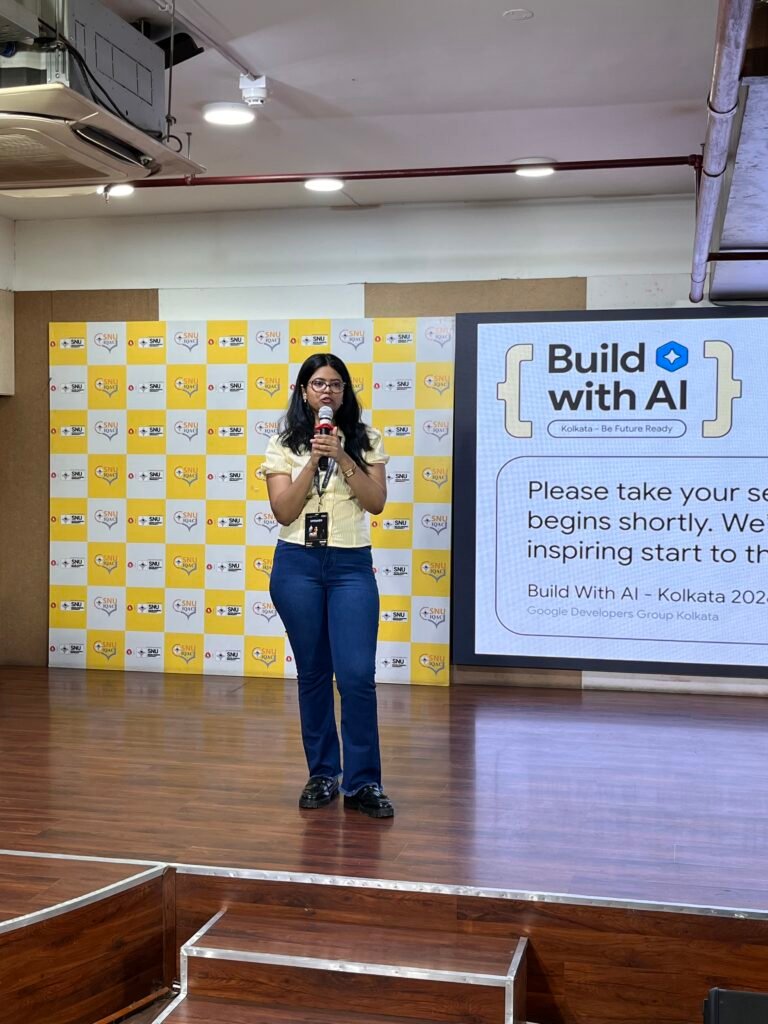
Aharna Haque’s session focused on how AI agents are no longer just reactive systems but evolving into goal-driven, autonomous collaborators. She explained the full lifecycle of an AI agent from defining objectives and training with human feedback to deployment and continuous improvement.
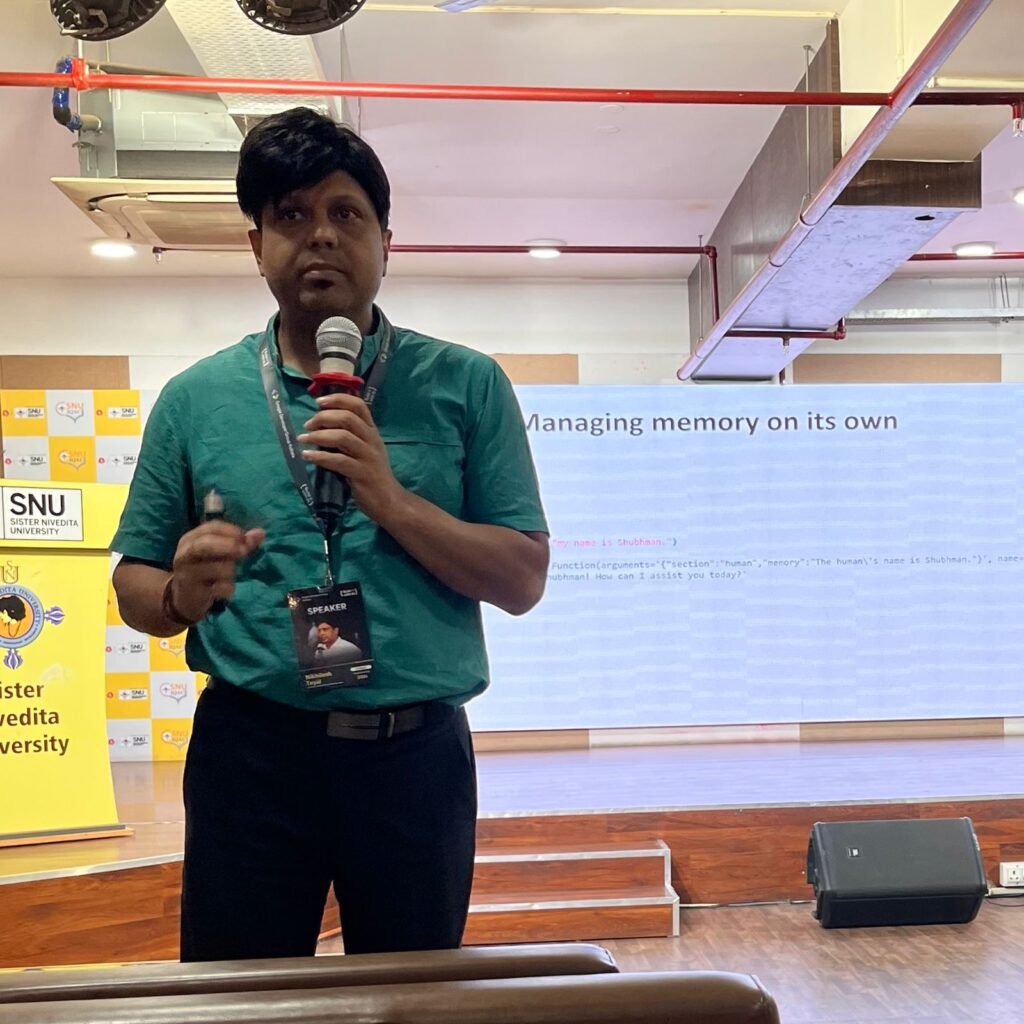
Nikhilesh Tayal’s session explored how modern AI agents evolve by managing their own memory dynamically, rather than relying on static context. He demonstrated how agents track conversations, extract relevant information, and store it for future use, enabling more personalized and context-aware interactions.
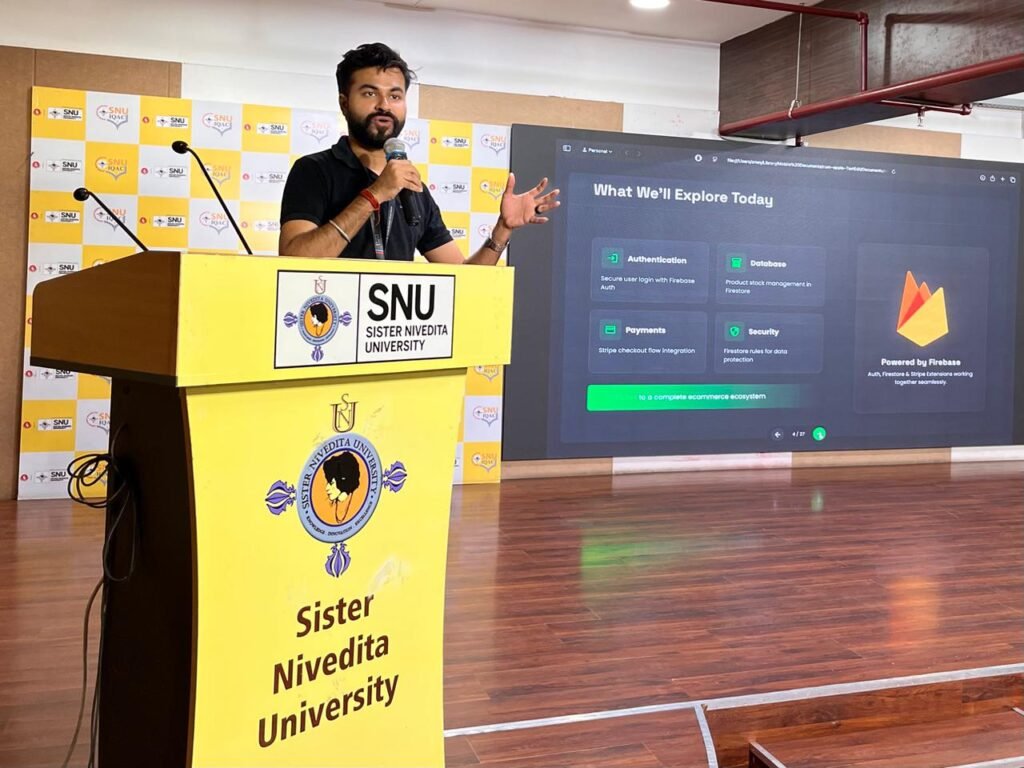
Amey Nerkar’s session focused on transforming complex datasets into clear, decision-ready narratives using AI-driven pipelines. He demonstrated how modern tools can eliminate heavy backend dependencies, enabling rapid prototyping with minimal infrastructure.
Shrushti Raybhoge’s session demonstrated how developers can rapidly build and scale applications using Firebase Extensions with minimal setup. She walked through the essential prerequisites and showed how common backend functionalities can be integrated without writing extensive custom code.
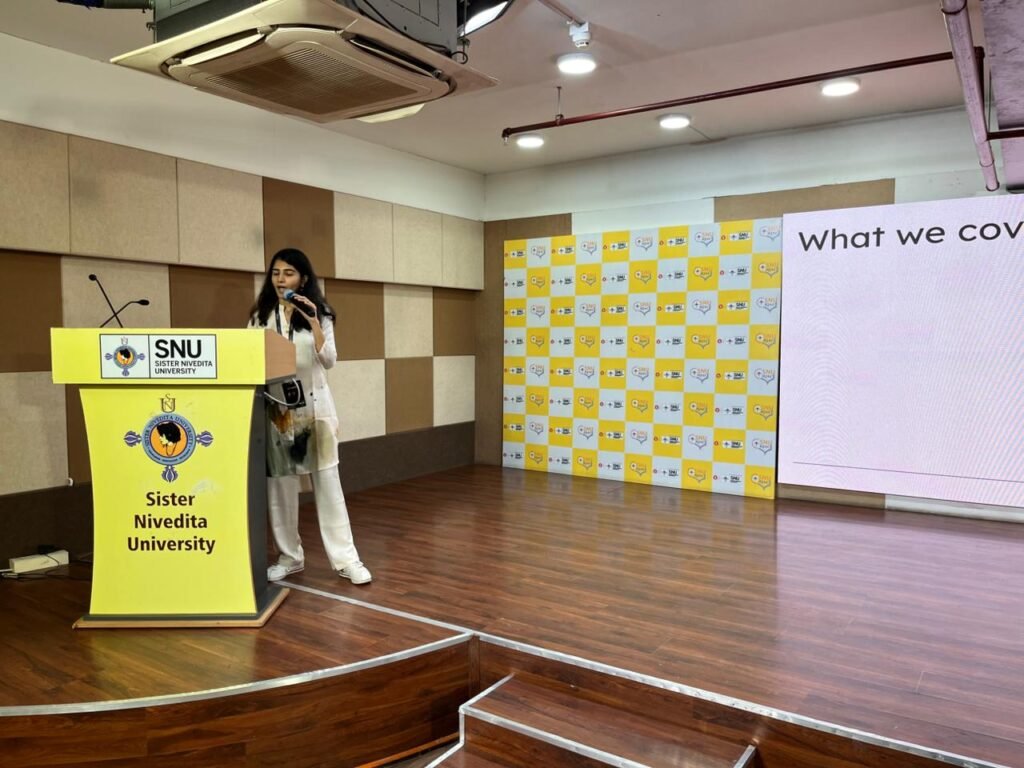
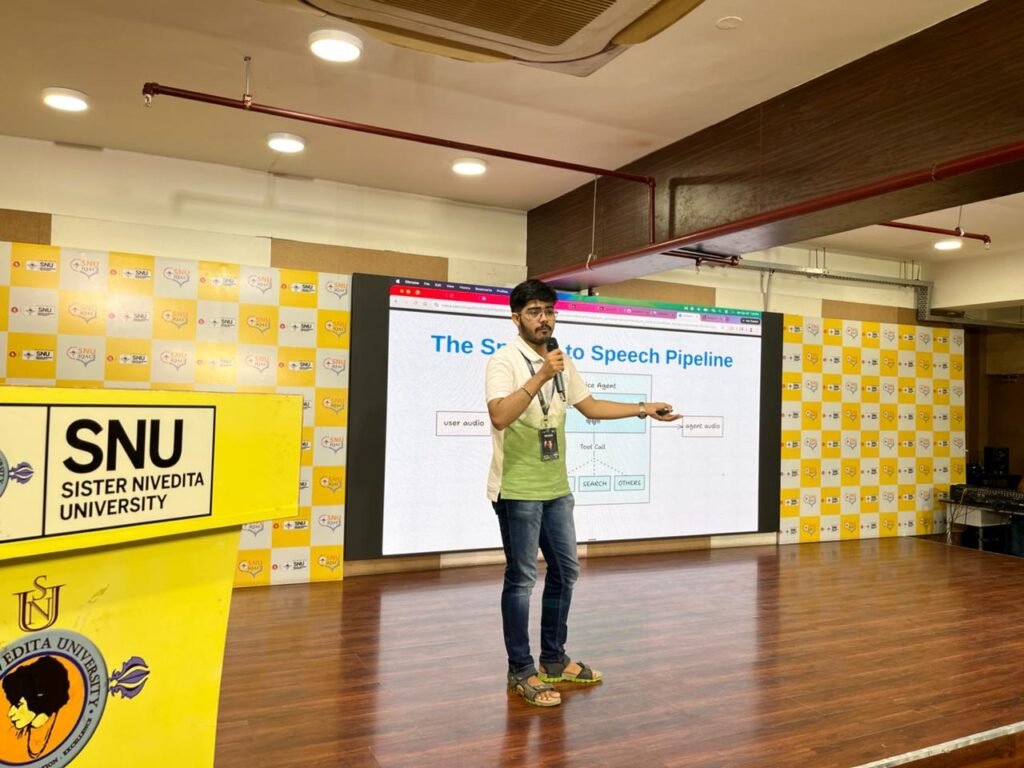
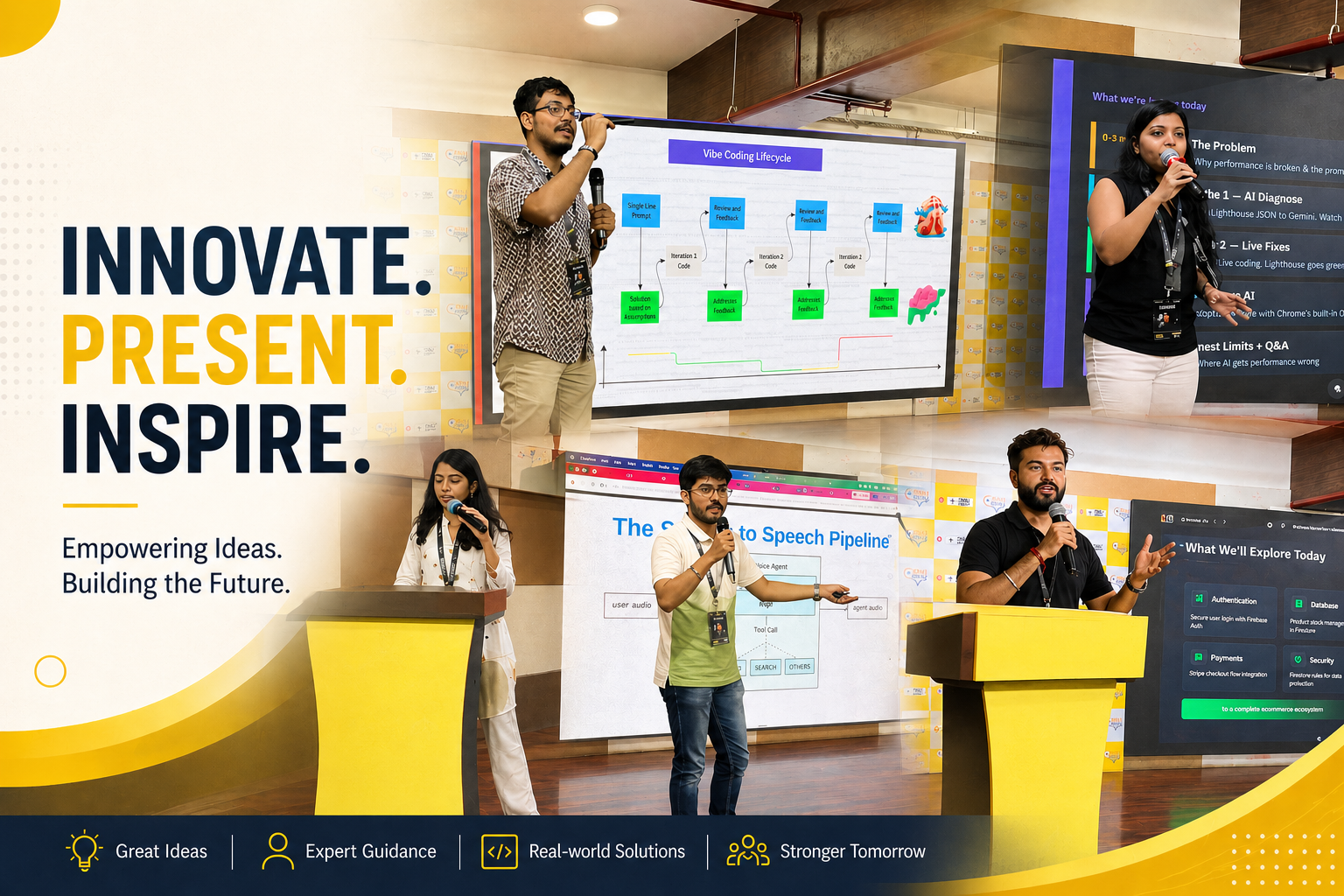
Arindam Majumdar’s session focused on modern voice AI systems, breaking down how traditional pipelines compare with newer, more efficient approaches. He began by explaining the conventional speech pipeline – Speech-to-Text (STT), followed by Large Language Model (LLM) processing, and finally Text-to-Speech (TTS).
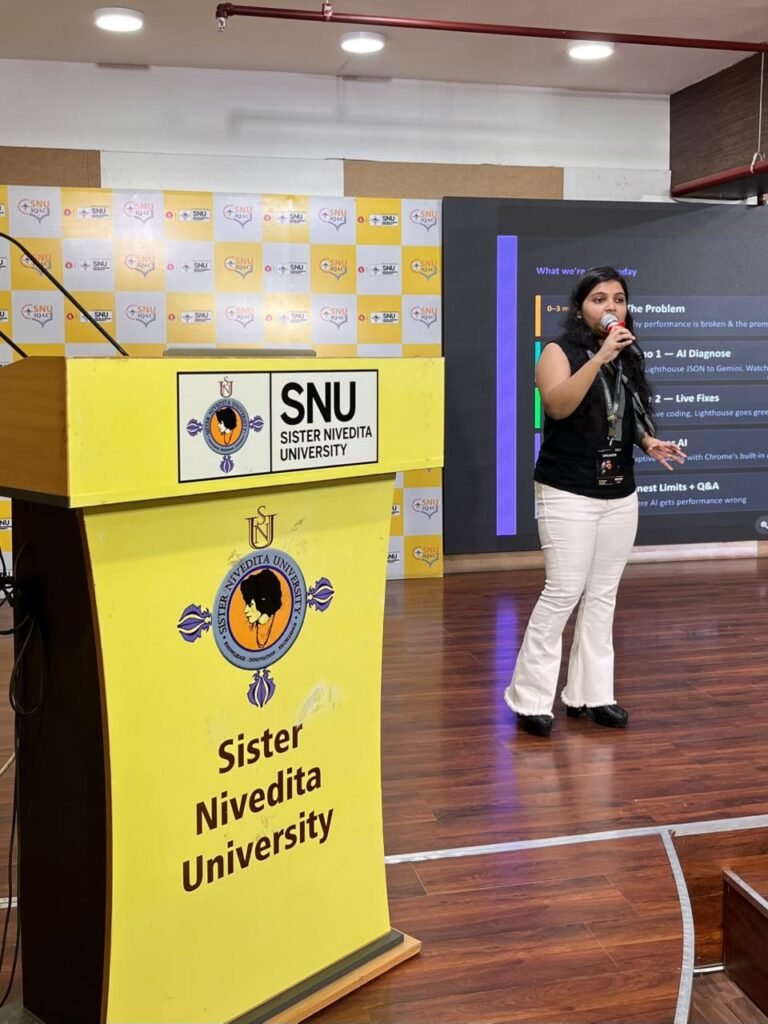
Sulagna Ghosh’s session stood out for its clear structure and hands-on approach it wasn’t just theory, but execution in real time. She began by framing the core problem why performance often breaks despite good intentions setting the context early. From there, she moved into Demo 1, where Lighthouse reports were fed into AI tools like Gemini to automatically diagnose issues.
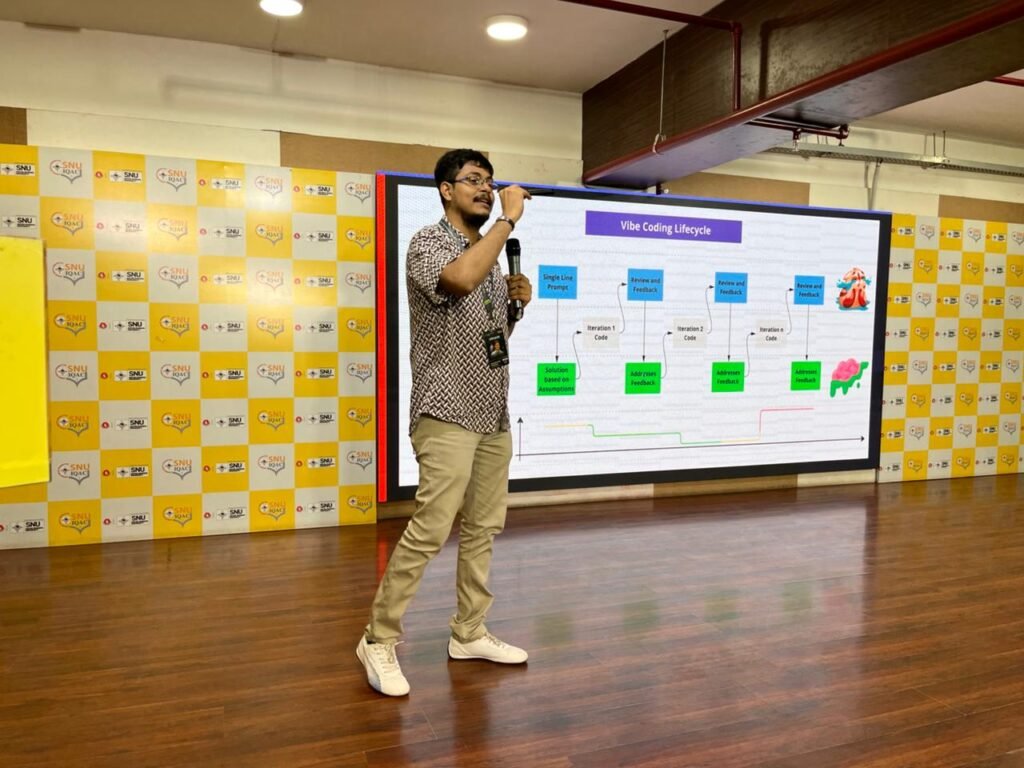
At the center of the talk was the idea of a “Vibe Coding Lifecycle,” which reframed how AI-assisted coding actually works in practice. It begins with a single-line prompt leading to an assumption-based solution where most people believe the process starts and ends but quickly moves into what truly matters: iteration. The real work happens through continuous cycles of code, review, feedback, and fixes, rather than one-shot generation. Each feedback loop improves the output, but only when the developer actively guides the process, reinforcing the reality that AI doesn’t truly “understand” it simply responds to the quality of direction it receives.
Overall, the event underscored several emerging trends: the rise of autonomous AI agents, the growing importance of memory and context in intelligent systems, the acceleration of development through low-code platforms, and the evolution of voice AI toward seamless, human-like interaction. With its strong focus on practical learning and community engagement, Build with AI Kolkata: Be Future Ready successfully positioned itself as a platform for developers to not only learn about AI but actively build with it. Organized by GDG Kolkata, the event highlighted the importance of staying ahead in an increasingly AI-driven world.